
Search the Hart Court Docket
Hart's verified civic contact is the Texas Municipal League profile. That listing is a directory entry, not a docket. The phone number shown is 806-938-2171. Call it and ask for the current municipal court clerk. Also ask for the records address, office hours, and how the court accepts requests. Before you dial, gather the citation number, the approximate date, the issuing agency, and a way for staff to reach you back.
- Check whether the citation names Hart Municipal Court, Castro County Justice Court, or another court.
- Call Hart's official civic number and request the current court contact.
- Give the citation number and date, then ask for the filed violation, status, and setting.
- Confirm payment, plea, copy, and certification channels before sending documents or money.
- If Hart is not the custodian, contact the court named by staff and keep both contact notes.
Hart Access Starts by Phone
Hart offers no official municipal-court page, no public calendar, no citation lookup, and no pay portal. That gap is itself an access fact. It makes a phone call worth more than any generic state search link. City staff can name the current court officer. They can also explain how to submit a public record request. Skip addresses pulled from an old directory. Confirm the court name, mailing address, clerk, hours, fee, and payment form first. Ask whether you can inspect the file in person and whether an electronic plain copy is possible. Hart posts no fee schedule or stated turnaround.
The Hart Municipal Court
Hart Municipal Court is the likely custodian for city ordinance matters and fine-only Class C cases, including tickets filed with the court. Jurisdiction follows the issuing agency and the court named on the ticket. It does not follow where a driver lives. A county-issued citation may instead belong to Justice of the Peace Mary Ewing. The current contact path publishes no case-level search. An older judicial directory will not reliably name a sitting Hart judge. So call 806-938-2171. Confirm both the clerk and the judge before relying on any officer's name. The Texas Municipal League Hart profile is the verified civic starting point, and the official page behind it shows the city's contact details.
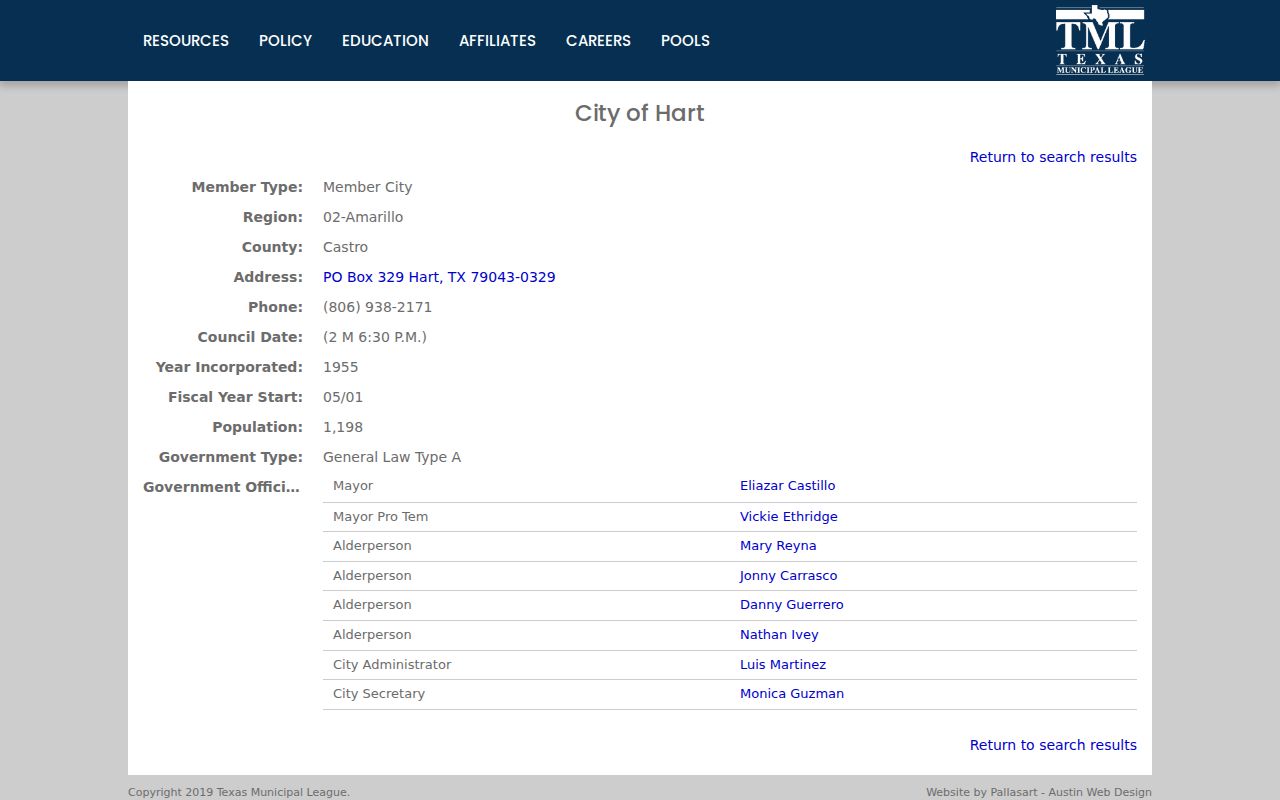
The official directory page supplies contact details for routing a request, but it does not list cases or court dates.
Hart Citation or County Ticket
The court printed on the ticket settles the custody question. A citation from Hart Municipal Court stays a city record. A county-level traffic or fine-only matter can sit with the Castro County Justice Court. That court sits in Room 201 at 100 E Bedford Street, Dimmitt. Reach it at 806-647-2328. Hart city staff cannot hand over that county file. For a Texas Highway Patrol ticket, the DPS citation tool can return court contact data. Eligible citations fall within its stated lookback. It does not set a plea. It takes no payment and issues no certified disposition. Whatever court contact DPS returns is the one to follow.
Hart Court Dates and Settings
Go by the appearance date on the citation until Hart sends a later notice. Ask the court what kind of setting it is. A response deadline differs from docket call, pretrial, trial, or compliance. Hart posts no public calendar. A direct call is the documented way to confirm a reset.
| Date | Citation appearance date or later date confirmed by Hart |
|---|---|
| Time | Exact time supplied by the current municipal clerk |
| Location | Current Hart court address, which must be confirmed |
| Judge | Current official to confirm; older listings are not treated as current |
| Setting Type | Response, pretrial, trial, or compliance event stated by the court |
When Hart Cannot Find It
A missing Hart match does not end the search. Reread the citation for the issuing agency and court. Ask staff whether the citation has posted yet. Ask whether another city or the Castro County Justice Court is named, and whether the number was read correctly over the phone. Write down the date you called. For an eligible Highway Patrol citation, the official DPS search asks for driver license or ID, date of birth, first name, and last name. Those entries must match the license data from the traffic stop. Every other agency's ticket goes back to the issuing court, not through DPS.
Appearance date still controls: Do not assume a missing online result extends the deadline. Ask the named court for prompt instructions.
Hart Traffic Tickets
Before picking a route, ask the Hart court about payment, a not-guilty plea, a driving-safety course, and deferred disposition. Texas law sets the core procedures. Local eligibility, fees, proof, and deadlines come from the court itself. Paying a ticket can carry a plea consequence. Anyone planning to contest should call first. No Hart payment portal is verified, so use only a method the clerk confirms. For the wider city, Justice Court, and DPS routing rules, see Castro County traffic court records.
Hart's Zero Statistics Row
The 2024 OCA municipal activity summary shows a zero row for Hart. That table is a period report, not a list of current cases. A zero there proves very little. It cannot show that no Hart citation exists, that nothing was filed, or that no setting is pending. Treat OCA reports as a way to study court activity over time. Never treat them as a case answer. A ticket search comes down to the city contact. The citation and the current clerk matter too. In a small municipality, the public route is often staff-assisted rather than automated.
Where Hart Cases End Up
Hart Municipal Court handles its limited city tier. Constitutional county matters go through the County Clerk. District criminal, civil, and juvenile records live with the District Clerk. The Justice Court keeps its own traffic and small civil docket. An appeal may open a county case, but the original Hart record still stands.
Docket flow: Hart Municipal Court › Castro County Courts › District Court
Match the court to the stage of the case. The Castro County court docket maps the full county path, while Hart itself remains the source for the municipal file.
Requesting a Hart Disposition
For proof of an outcome, ask Hart for the final order, a receipt, or a certified disposition. Do not rely on a verbal status. Give the citation number, the date, and the copy type. Before sending money, confirm the full charge and the accepted payment method.
A docket only lists events. The order behind it is a separate document. Hart publishes no fee schedule, so do not assume District Clerk rates apply. Ask about processing time and delivery too. Keep the response with your request date and the clerk contact.
Hart Request Details That Help
Hart staff may need more than a name. The citation number works best. If it is missing, offer the approximate date, the issuing agency, the type of violation, and a narrow date range. Ask Hart to confirm the city holds the file. Do that before any talk of payment or copies.
Separate three needs in a request: present status, the next court date, and documentary proof. Status can often be answered by phone. A hearing notice or docket entry may take a copy. A certified disposition is a formal clerk product. Name the one you need so Hart does not have to guess.
Hart publishes no routine ID requirement for public inspection. Do not volunteer sensitive data the court has not asked for. If verification applies to a restricted record or a personal court option, ask the current clerk which secure method is accepted and why.
Hart Appeals Create Two Records
A Hart appeal can create two records. The city keeps the original citation and municipal events. The receiving county court opens its own docket. That means you may need a Hart disposition plus the county cause number.
Ask Hart for the transfer date and form. Then ask the receiving clerk how its case is indexed. Do not assume iDocket holds the full municipal history. The county participation list names Castro offices, but clerk confirmation settles exact case and document coverage.
Hart Visit Planning
Call first. Hart hours and addresses change, and a phone check saves a trip. Ask where Municipal Court records are inspected. Ask whether the clerk will be present, and whether a setting is in person. Do not substitute the Castro County courthouse address for a Hart location unless the court directs it.
Take the citation. Bring only the facts that identify the file. If staff routes the ticket to Justice Court, get that court and its contact in writing. The county Justice office lists Room 201 at 100 E Bedford Street and 806-647-2328. That referral keeps a Hart search from becoming an inquiry at every clerk counter.
Hart Records Without a Portal
Hart has no case portal. The method changes, not the need for precise facts. Treat 806-938-2171 as a routing line. Ask for the current municipal clerk. Then repeat the citation number, the issue date, the agency, and the record you seek. If the first employee cannot find the matter, ask whether citations sit under a different number. Ask whether they went to another court. Silence means nothing here. Never infer dismissal from a missing online result.
The access gap makes written confirmation valuable. After each call, note the date, the office, the status stated, and the next step. When a hearing date matters, request a written setting notice. If the court accepts a mailed plea, payment, or record request, confirm the address, the payee, any required signature, and the delivery deadline. The court posts no drop box, no online payment button, and no standard processing time. Assume none of them exist.
A docket entry and a certified result serve different needs. The docket shows the event sequence, from filing and setting to plea and disposition. A certified disposition is different. It is a clerk-authenticated copy of the result. Ask whether Hart provides both, and whether separate fees apply. If an appeal opened a Castro County file, get the municipal disposition from Hart. Get the later county documents from the receiving clerk.
A web search may surface the official OCA directory and its statistical database. Those tools show court categories and reported activity. They do not show Hart party names or live case events. The 2024 zero row cannot answer whether a new citation exists. Treat it as context only. For a personal court date or case status, the ticket and the current court contact remain the evidence.
Public Hart Court Record Access
Start with the municipal court contact. City government is the way to reach it. The clerk offers no dedicated form, so confirm phone, counter, or mail access before you send anything. Case records go to the court clerk. Non-case judicial records may fall under Rule 12, and covered city administrative records under Chapter 552. Sealed and confidential material stays sealed, no matter how broad the request.
Key Rules:
Texas judicial records policy explains the direct clerk route and Rule 12 boundary.
Texas Public Information Act governs covered administrative records, not every court case request.
Texas Family Code Chapter 58 protects juvenile record information.